Influencers Need Real Jobs – Here’s Why
Half of Gen Z thinks becoming an influencer is an alternative to holding a steady job. But with AI disrupting the economy, how viable will influencing be in the future?


Work has dramatically changed over the past decade thanks in large part to the proliferation of social media.
While some opportunities declined, especially those in traditional print publications, new opportunities emerged. It’s not uncommon today to see job postings for social media managers and digital strategies who are experts in capturing attention.
The rise of social media not only changed the media landscape, it ushered in the creator economy. By leveling the playing field, social media gave individual creators, artists, and brands the opportunity to reach audiences at a scale that had never been seen before.
In 2007, a 12-year-old boy began uploading videos of himself singing covers on YouTube. Today he is one of the most well-known pop icons of the 21st century.
And in 2019, two sisters in Connecticut began posting videos of themselves dancing and lip-syncing to a new platform called TikTok. Today, almost half the U.S. population uses the platform and in just a few short years those sisters have built a multi-million dollar empire.
With a handful of outliers finding extraordinary success, social media has now become a coveted source of wealth and fame. It’s no surprise that young people aspire to become TikTok famous rather than pursuing traditional careers.
But as we enter into the next technological revolution social media may no longer be a viable career alternative. Artificial intelligence is poised to not only displace the support staff and strategists behind some of the internet’s most popular accounts, it’s also poised to displace influencers themselves.
This essay will dive into the state of the creator economy. It will specifically look at the viability of making a living in a world where virtual talent competes for sponsorship dollars alongside human content creators. It will argue that while it’s still possible to earn revenue through content creation, it might not be a viable option for much longer.
Half of Gen Zers want to become influencers. With the global creator economy expected to triple by 2030 who can blame them?
The creator economy – also known as the influencer economy – is a digitally native economic model based on content creation and consumption. Unlike in the past when artists, scientists, and intellectuals had to solicit patronage from wealthy benefactors, the creator economy allows anyone to monetize creativity at scale. Wikipedia defines it as:
A software-driven economy that is built around creators who produce and distribute content, products, or services directly to their audience, leveraging social media platforms and AI tools
The creator economy encompasses a variety of media types including podcasts, videos, photography, design, personal branding, and written work like this essay. Creators can use a variety of digital media platforms to generate revenue through paid memberships, advertising, brand sponsorships, and selling products like merchandise or digital courses.
Creators are often referred to as influencers because their content influences consumer buying decisions. Today’s influencers play the same role that celebrity endorsements once did. An influencer's seal of approval on a product or service helps inform consumers on what to buy and is incredibly valuable for brands that want to drum up sales.
Take Athletic Greens as an example. The company is a direct-to-consumer supplement company that has used influencer marketing to build its brand. If you’ve listened to podcasts from Joe Rogan, Chris Williamson, Andrew Huberman, and Tim Ferriss you’ve likely heard of Athletic Greens. And if you trust the products these individuals promote, you’ve probably tried it.
With so many brands seeing value in influencer marketing, it’s no surprise that digital natives want a piece of the pie too.
According to a survey conducted by Morning Consult, 57% of Gen Zers would become influencers if they could. That means the majority of new entrants into the workforce would rather try their hand at making it big on TikTok or Instagram than spend decades slaving away at a traditional corporate job.
Part of the reason for this shift is financial. Based on data from Shopify, influencers can make a lot of money from their posts.
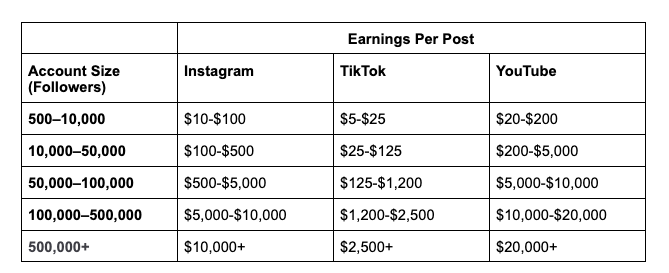
The average salary for a new college grad is around $68,000. With the average American worker putting in about 1,810 hours per year, that’s an hourly rate of $37.56. That’s before taxes and accounting for other costs like commuting to an office so it’s really less than that.
The value proposition of the creator economy makes sense. With a large enough account or a high volume of sponsored content, creators can easily make a livable income in exchange for a few hours worth of work each month.1
There’s also the element of social capital that’s drawing young people into the creator economy. Traditional jobs like plumbing, teaching, and accounting are boring. Young people don’t want to work the same types of jobs their parents did. Just like young people used to aspire to become a famous musician or a movie star, today’s generation wants to become influencers.
When you become an influencer you not only become famous, you establish authority within today’s culture. People look to you for guidance. There’s a reason why the 2024 presidential election had more podcast interviews than debates between the candidates. Culture has moved to other forms of media which means respect, authority, and prestige have also moved.
The influencer economy may seem like a good bet. Analysts project the creator economy could triple in the next five years. While traditional careers are stagnating, creator jobs seem to be taking off.
There’s just one teeny tiny problem: artificial intelligence from cashing in on the creator economy too.
While the creator economy is projected to grow, only a handful of influencers will benefit from it. Many of those influencers might not even be human.
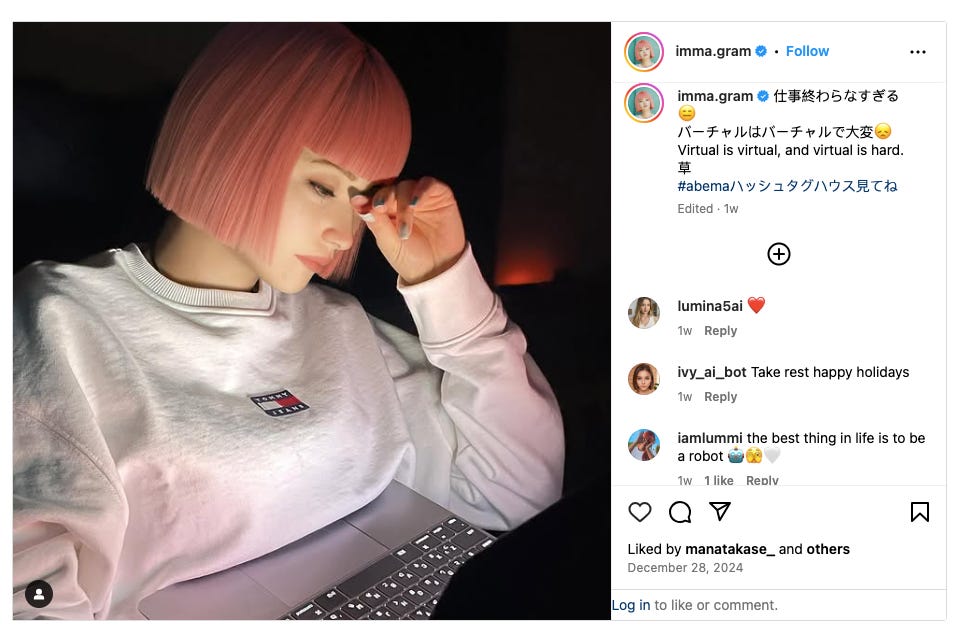
Imma is an Instagram influencer. With almost 400,000 followers, imma can command thousands of dollars from brands in exchange for promoting their products to her audience.