
Was Ted Right?
For nearly two decades the Unabomber was the most wanted man in America. He left behind a manifesto that warned us about what would happen if technology continued to progress. Was he right?

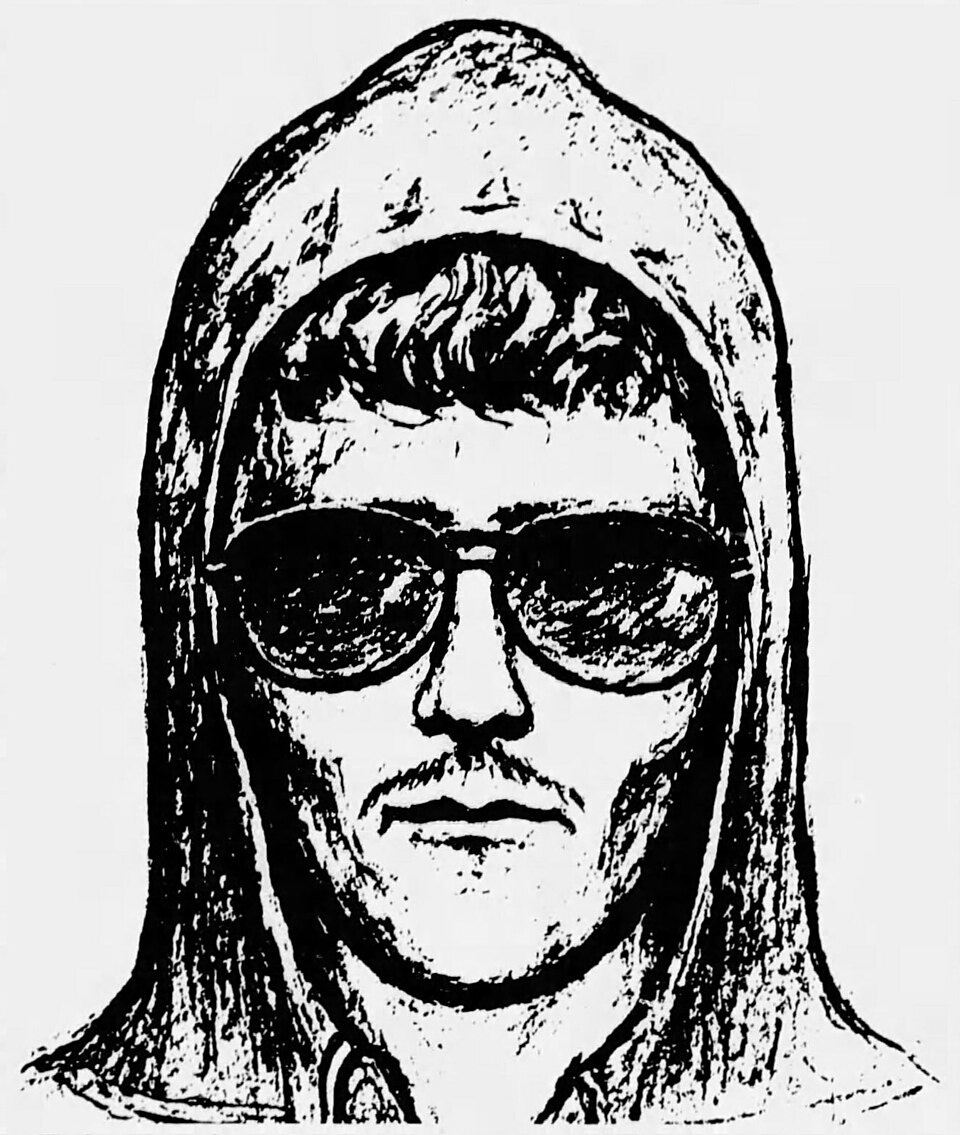

On May 25, 1978, a professor at the University of Illinois at Chicago received an unexpected piece of mail. His name was listed as the return address on a package he didn’t recognize sending. Concerned, the professor reported it to security. When an officer arrived to inspect the package, it detonated, revealing a bomb had been tucked inside.
This was the first of a series of bombs that would target university, airline, and business professionals over the course of the next 17 years. In total, 23 people were injured and three people were killed in a bombing spree that gripped the nation.
In 1996, the man behind the bombings was finally captured. Ted Kaczynski – referred to in the media as the Unabomber – had carried out a bombing campaign while living in a secluded cabin in a remote part of Montana. Kaczynski was only captured after his brother read a manifesto written by the Unabomber and recognized it as his brother’s writing.
Seven months before Ted Kaczynski was unmasked as the Unabomber, he sent a 35,000 word manuscript to both the Washington Post and the New York Times. Kaczynski believed violence was the only way to get his message across and promised to desist from his bombing campaign if his manifesto was published.1
Titled Industrial Society and Its Future, the manifesto warns about the implications of technological progress on society. The author implores readers to stage a revolution against the industrial-technological system, warning that an inevitable authoritarian regime would descend from uncontained technological growth if technological advancement was allowed to continue.
While Kaczynski is remembered as a violent domestic terrorist and a cold-blooded killer, his manifesto suggests his reign of terror was a means to a much larger end. He understood his message wouldn’t get across unless he did something drastic. In his manifesto, he confessed that killing people was the only way to get his ideas published and draw attention to the peril modern humans found themselves in:
In order to get our message before the public with some chance of making a lasting impression, we’ve had to kill people. (96)
Today, his anti-technology message is barely a footnote in history. Unless you search for Industrial Society and Its Future, you’re unlikely to stumble upon it. Yet after reading it, the thesis Kaczynski lays out – that technology will lead us to a path of authoritarianism and loss of individual freedom – is more prescient than ever before.
We continue to let technology advance assuming it’s for humanity’s benefit. We surrender our individual freedoms to it without fully thinking about what we’re giving up. With the AI revolution underway and simultaneous advancements in robotics and genetic engineering in the works, we’re rapidly approaching a Rubicon that, once crossed, there will be no turning back.
Technological progress has created a standard of living few of us would be willing to live without. From modern medicine to instant communication to unlimited access to all the knowledge in the world, technology has ushered in levels of wealth and prosperity our ancestors never could have fathomed.
And yet, the society built around technological growth has also created the foundation for surveillance, censorship, political polarization, and unprecedented wealth inequality. Even though all of us have benefited from the progress we’ve been endowed with, there are trade-offs we’ve had to make. There are philosophical questions we must ask about whether or not the trade-offs for all this progress will be worth it in the long run.
Ted Kaczynski committed heinous acts of violence. He callously murdered and maimed innocent people at no fault of their own. But he also called attention to a fundamental paradox of progress. Individual freedom and technological advancement are incompatible. One will inevitably come to dominate the other. Unless the industrial-technological system is destroyed, it will be impossible for individual freedom to persist.
This essay unpacks the Unabomber’s manifesto to look at the relationship between technological progress and individual freedom. It will evaluate the manifesto’s thesis to understand how technology inevitably leads to the loss of freedom and the eventual descent into totalitarian rule. It will offer contemporary examples that show Ted Kaczynski may have been right in his warning all along.
Editorial Note: This essay is an analysis of Ted Kaczynski’s thesis on the perils of technological progress. It is NOT an endorsement of Kaczynski’s terror campaign or the use of violence to advance a message or cause. The purpose of analyzing this work isn’t to glorify the actions of the Unabomber, it is to better understand the society we are living in from the perspective of someone who understood the implications of technological progress and was deeply troubled by what he believed was destined for us if we failed to stop the industrial-technological system from continuing to advance. You, the reader, are invited to draw your own conclusions.
These engineered human beings may be happy in such a society, but they most certainly will not be free. They will have been reduced to the status of domestic animals.
Industrial Society and Its Future argues that the modern industrial-technological system that emerged as a result of the Industrial Revolution has been a disaster for humanity. The decline in quality of life has set the stage for inevitable authoritarian control.
Ted Kaczynski opens his manifesto by arguing that the society that emerged out of the Industrial Revolution has “subjected human beings to indignities,” the greatest of which has been depriving humans the opportunity to set and achieve goals on their own terms. What has been dubbed as economic progress that launched humanity into the modern world we live in today has done little more than reduce humans to “cogs in the social machine.”
A core theme of Kaczynski’s thesis is an idea he refers to as the “power process.” According to Kaczynski, the power process is an innate desire in human beings to fulfill biological and physical needs. This is achieved by setting goals and being able to achieve those goals, autonomously or in cooperation with a small group of other people.
Thanks to the progress of industrialization, modern humans no longer need to exert all of their waking hours to meet their immediate physical needs. While it might not seem like it in today’s economy, we have more time allocated toward leisure activities today than societies of the past.
It’s true that a portion of one’s employment is allocated towards earning an income to be able to purchase essential things like food, clothing, and housing. But it’s also true that many of us work for convenience, mistaking wants for necessities. Outside of meeting our immediate needs, the remaining time we spend slaving away for The Man is largely superfluous. It procures social capital, prestige, and material possessions, but it does little to fundamentally change our station in life.
Kaczynski believes all of this is the result of inorganic desires prescribed by clever advertisers and marketers. Artificial desire is an example of the psychological manipulation the industrial-technological system has imposed on us to effectively enslave us. Instead of working hard to meet our immediate needs, Kaczynski suggests we allocate the bulk of our time towards surrogate activities. He defines surrogate activities as:
An activity that is directed toward an artificial goal that people set up for themselves merely in order to have some goal to work toward. (39)
According to Kaczynski, most jobs, scientific inquiry, running marathons, producing art, writing poetry, and volunteering at your local homeless shelter are all examples of surrogate activities. While these activities may provide some value to your life, they are insufficient to meet the fundamental need of the power process. They won’t provide the same fulfillment that you would find by achieving an authentic goal with the autonomy and freedom to do so on your own terms.
But it’s not just the substitution of artificial goals for real goals that is the problem. Modern society fundamentally deprives humans of the ability to experience the power process altogether.
Since the Industrial Revolution, humans have been forced out of small-scale communities where they worked with their family and neighbors towards achieving real goals like growing food or raising a shelter. Disconnected from their communities, workers were moved into densely populated cities where they are isolated from their existing social networks and exposed to rapid social change. Surrogate activities are not so much the result of individual choice, but a result of inorganic goals imposed on us by the industrial-technological system that we live in.
At the same time, whatever goals humans work towards – artificial or not – those goals need to be executed within the realm of an individual’s control. More often than not, this is no longer the case. Kaczynski writes:
Most people need a greater or lesser degree of autonomy in working toward their goals. Their efforts must be undertaken on their own initiative and must be under their direction and control. (42)
Unable to achieve real goals on their own terms, humans have become demoralized. They find themselves in the midst of an identity crisis, unsure who they are or what their purpose is. While surrogate activities may provide short-term reprieve it is never enough.
Absent real goals to work towards, Kaczynski argues the only way for humans to experience some modicum of the power process is to attach themselves to an organization or social movement that allows themselves to achieve superficial goals by proxy. More often than not, this is offered through leftism. Kaczynski argues that as individuals align themselves with leftist social movements to overcome modern society’s disruption of the power process, those individuals will be co-opted and manipulated by powerful elites who use technology to impose totalitarian rule on the rest of us.